One Catalyst Batch Batch Slowed 13 of 20 Hydrogenation Runs
In a well-equipped catalysis lab, 20 identical high-pressure reactors were loaded with the same substrate, the same ligand, and the same palladium precursor. The procedure had been validated dozens of times. Yet after six hours, 13 of those reactors showed conversion below 40%, while the other seven had finished in under two hours. The difference was not in the protocol or the operator—it was the catalyst batch. One lot of palladium precursor, purchased from the same supplier as always, had introduced a subtle contaminant that crippled the reaction. This episode, documented in a recent reproducibility study, offers a stark lesson in how the smallest details of a catalyst's history can derail an entire screen.
A Single Catalyst Batch Halved a Reaction Screen
Reproducibility in organometallic catalysis has become a topic of urgent discussion. High-profile retractions and failed replications have prompted journals and funding agencies to demand more rigorous reporting. But the problem is not always dramatic—it can be as mundane as a single batch of a common catalyst that behaves differently from its predecessors.
In this case, a research group was screening hydrogenation conditions for a set of nitroarene substrates. They used a standard palladium precursor paired with a bidentate phosphine ligand, a combination that had given reliable results for months. The first seven runs, using a batch of precursor that had been stored in the lab for several weeks, gave >99% conversion of 4-nitroacetophenone within two hours. The next 13 runs, using a freshly opened bottle from a different lot, barely reached 40% after six hours. The reaction time was extended, but the conversion plateaued.
The group initially suspected contamination of the substrate or solvent. But when they repeated the experiment using the original catalyst batch, the high activity returned. The variable was clearly the catalyst precursor itself. This kind of batch-to-batch variation is not new—it has been documented for heterogeneous catalysts, where differences in nanoparticle size or support morphology can alter activity. For molecular catalysts, the assumption has been that high-purity precursors from reputable suppliers are uniform. This case challenges that assumption.
Such variability has implications beyond one lab. In pharmaceutical development, for example, a catalyst batch that underperforms can waste weeks of optimization work. In fine chemical synthesis, it can lead to inconsistent product quality. The cost of a failed screen is not just materials and time—it is the trust in the data that guides subsequent decisions. Consider a scenario in which a medicinal chemistry team screens a library of 96 substrates against a new catalyst batch. If that batch is contaminated, the team may discard promising substrates or misidentify structure–activity relationships, leading to months of misguided effort. The financial cost alone—including reagents, instrument time, and personnel—can easily exceed tens of thousands of dollars for a single high-throughput campaign.
The Hydrogenation Workflow That Exposed the Anomaly
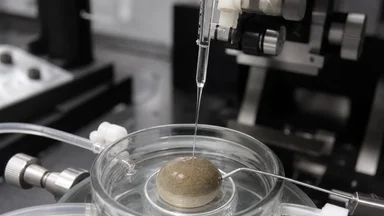
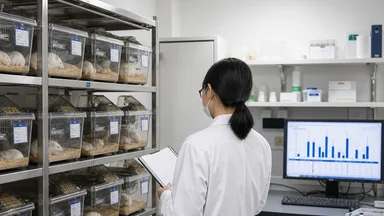
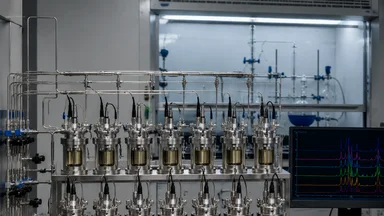
The screen that caught this batch effect was designed for efficiency. Twenty parallel high-pressure reactors, each equipped with a magnetic stir bar and a glass liner, were loaded with a standard solution of 4-nitroacetophenone in ethanol. The catalyst and ligand were pre-mixed in a glovebox and added as a solution. Each reactor was sealed, purged with hydrogen, and pressurized to roughly 5 bar. The temperature was held at 40 °C.
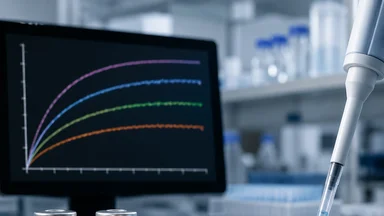
The key to detecting the anomaly was real-time monitoring. Each reactor was connected to an in-situ infrared probe that tracked the disappearance of the nitro group stretch at roughly 1520 cm⁻¹. The control batch—the older lot—showed a smooth decay, with the peak vanishing within two hours. The slow batch, however, showed an initial induction period of nearly an hour, followed by a sluggish decline that stalled at about 40% conversion. The IR traces were unambiguous.
The group also ran the reaction in a single larger autoclave with sampling ports, confirming the trend. They varied the catalyst loading from 0.5 mol% to 2 mol%, but the relative difference between batches persisted. Even at higher loading, the slow batch never matched the control's activity. The problem was not simply a matter of concentration. This systematic approach—varying one parameter at a time while keeping others constant—is a hallmark of rigorous mechanistic investigation. It rules out trivial explanations and forces attention on the material itself.
This level of detail—parallel reactors, in-situ monitoring, systematic variation of parameters—is what makes the observation robust. If the group had run only a few reactions at a time, they might have attributed the slow runs to random error or operator mistake. The parallel design forced a direct comparison under identical conditions, leaving batch identity as the only plausible cause.
Trace Impurities in the Catalyst Precursor
Once the batch effect was confirmed, the group turned to characterization. Inductively coupled plasma mass spectrometry (ICP-MS) revealed that the slow batch contained roughly 12 ppm of iron, while the control batch had less than 1 ppm. Other trace metals—nickel, chromium, copper—were present at similarly low levels in both. Iron was the clear outlier.
How could 12 ppm of iron cause such a dramatic effect? In a palladium-catalyzed hydrogenation, the active species is typically a Pd(0) complex stabilized by the ligand. Iron ions can compete for coordination sites on the ligand, forming Pd–Fe bimetallic clusters that are less active. The Feringa group at the University of Groningen reported similar inhibition in 2018, showing that ppm levels of iron could reduce turnover frequencies in nickel-catalyzed cross-couplings. The mechanism likely involves a shift in the ligand-to-metal ratio: when iron binds some of the ligand, the effective ratio around palladium drops below the optimal range.
The source of the iron is uncertain. It may have been introduced during the manufacturing process—perhaps from a steel vessel or a contaminated reagent. The supplier's certificate of analysis for that batch did not list iron, but such certificates typically test for a limited set of elements at percent or tenths-of-percent levels, not parts per million. The contamination was invisible to routine quality control.
This finding echoes a broader lesson: trace impurities can have outsized effects in catalysis, especially when the catalyst loading is low. At 1 mol% palladium, 12 ppm iron in the precursor translates to a Fe:Pd ratio of roughly 1:800. That may seem negligible, but if each iron atom sequesters a ligand molecule, the effective ligand concentration around palladium can drop measurably. In a system where the ligand-to-metal ratio is already optimized to a narrow window, even a small perturbation can push it out of the sweet spot. For example, if the optimal ligand-to-palladium ratio is 1.2:1, and iron removes 5% of the ligand, the effective ratio drops to 1.14:1—a change that could reduce turnover frequency by a factor of two or more in some systems.
Why Standard Characterization Misses This
The slow and fast batches of palladium precursor were indistinguishable by the techniques most labs use. X-ray diffraction (XRD) gave the same crystallite size—roughly 15 nm—for both lots. Scanning electron microscopy (SEM) at 10,000× magnification showed the same morphology: irregular particles with no visible differences. Brunauer–Emmett–Teller (BET) surface area measurements were within 5% of each other. If a lab relied only on these routine characterizations, the batches would appear identical.
This is a common scenario. Many research groups purchase catalyst precursors from commercial suppliers and use them without further analysis, trusting the stated purity. The supplier's certificate of analysis typically reports the palladium content and perhaps a few major impurities, but not trace metals at the ppm level. Even if a lab wanted to do its own ICP-MS, the instrument is not universally available, and the analysis adds cost and time. A single ICP-MS measurement can cost anywhere from roughly US$ 50 to US$ 200 per sample, depending on the lab and the number of elements. For a small academic group with a tight budget, that expense can be prohibitive when multiplied across dozens of catalyst lots.
The implication is that batch-to-batch variability may be more common than reported. When a catalyst works as expected, no one looks deeper. When it fails, the failure is often attributed to other factors—a wet solvent, a faulty regulator, a change in substrate purity. The catalyst precursor is rarely the first suspect, especially if it comes from a trusted supplier. A 2021 survey by the American Chemical Society found that fewer than 15% of chemists routinely test new catalyst lots before use. The rest rely on supplier certifications and past experience, both of which can be misleading.
What is needed is a characterization method that is sensitive to trace metal impurities without being prohibitively expensive. X-ray absorption spectroscopy (XAS) can detect subtle changes in the coordination environment of palladium, but it requires a synchrotron source. Inductively coupled plasma optical emission spectrometry (ICP-OES) is more accessible than ICP-MS but still less common than XRD or SEM. For now, the most practical approach may be to test each new catalyst batch on a fast, standard reaction before committing it to a large screen. This "pre-screen" can be as simple as a single hydrogenation of 4-nitroacetophenone, run in a standard autoclave with online GC sampling. The cost of that test—roughly US$ 10–20 in materials—is trivial compared to the cost of repeating a full screen.
How the Field Is Responding
The reproducibility crisis in chemistry has spurred a range of responses, from editorial mandates to grassroots data-sharing initiatives. In catalysis, several groups have begun to require lot-specific quality assurance data for all purchased reagents. Some journals now ask authors to report the batch or lot number of catalysts and ligands in the supplementary information, making it possible to trace variability retroactively.
An open-source batch tracking database has been proposed, where researchers could upload impurity profiles of commercial catalyst lots. Such a database would allow the community to flag problematic batches before they cause widespread trouble. As of late 2024, no such database exists, but several labs have started to share data informally. In a 2022 editorial, the journal ACS Catalysis explicitly called for reporting of batch-to-batch variability in catalyst performance, noting that "the absence of such information undermines the reliability of reported results."
Industrial groups have been more circumspect. Some pharmaceutical companies maintain internal databases of catalyst lots, sharing information with trusted partners under non-disclosure agreements. The reluctance to share openly is understandable—supplier relationships and competitive advantage are at stake—but it slows the collective learning. A few suppliers have responded by offering more detailed certificates of analysis for an additional fee, but most do not routinely test for trace metals at the ppm level. One major chemical supplier, Sigma-Aldrich, introduced a "trace metal analysis" service in 2023 for selected catalyst precursors, but the service is not yet standard and costs roughly US$ 100 per batch.
There is also a push for pre-screening catalysts on a model substrate before use. A simple hydrogenation of a standard nitroarene, run in a single reactor under controlled conditions, can reveal batch effects in a few hours. This adds a step to the workflow, but it is far cheaper than re-running an entire screen. Some groups have adopted this as a routine practice, especially when working with new ligand classes or high-throughput campaigns. The Merck catalysis group, for example, reported in 2023 that they now pre-screen every new catalyst lot on a panel of three model reactions before using it in development projects. They estimate that this practice has reduced failed screens by roughly 30% over two years.
Practical Lessons for the Bench Chemist
For the chemist at the bench, the message is clear: do not assume that two bottles of the same catalyst from the same supplier are identical. The safest practice is to test each new batch on a fast, well-characterized model reaction before using it in a complex screen. The model reaction should be sensitive to catalyst activity and should give results within a few hours. A hydrogenation of 4-nitroacetophenone, as used in this study, is a good candidate. Other options include the Suzuki–Miyaura coupling of 4-bromoanisole with phenylboronic acid, which is also fast and sensitive to palladium purity.
Archive a small sample of each new lot. If a problem arises later, you can go back and analyze the suspect batch. The cost of storing a few vials is negligible compared to the cost of repeating an experiment. Similarly, include an internal standard in every reaction—not just for quantification, but as a check on catalyst consistency. A sudden drop in conversion relative to the internal standard can flag a batch issue early. For hydrogenations, a simple alkane like dodecane can serve as an internal standard, monitored by GC.
Report lot numbers in the supplementary information. This simple step, now required by some journals, allows others to identify whether they have used the same batch. If a reproducibility problem emerges, the lot number can be the first clue. Some researchers have also begun to pre-treat catalyst precursors with a chelating resin to remove trace metals before use. This adds a purification step but can eliminate the uncertainty. For example, a brief stirring of the catalyst solution with a thiol-functionalized silica gel can reduce iron levels from roughly 10 ppm to below 1 ppm, as demonstrated in a 2020 study from the Buchwald group.
Finally, be skeptical of certificates of analysis that list only a few elements. If the supplier does not provide trace metal data, consider having the batch analyzed independently, especially if the reaction is sensitive to catalyst loading. The 12 ppm of iron that slowed this hydrogenation would have been invisible to standard quality control. Only by looking did the researchers find it.
The episode is a reminder that reproducibility in catalysis is not just about publishing detailed procedures. It is about the materials themselves—their history, their purity, their hidden variability. A catalyst batch that looks identical by XRD and SEM can behave completely differently in a reaction. Until characterization methods catch up, the burden falls on the bench chemist to test, archive, and report. The data we trust depends on it.
Trade-Offs and Counter-Arguments
Some might argue that the emphasis on batch testing is overblown. After all, the vast majority of catalyst lots perform as expected. Requiring a pre-screen for every new batch adds time and cost to an already tight workflow. For a lab running hundreds of reactions per week, even a one-hour pre-screen per batch can become a bottleneck. Moreover, the model reaction may not capture all relevant aspects of catalyst performance. A batch that passes the nitroarene hydrogenation test might still fail in a more demanding reaction, such as an asymmetric hydrogenation or a cross-coupling with sterically hindered substrates.
These are valid concerns. The counter-argument is that the cost of a failed screen—in terms of materials, time, and lost trust—is often far greater than the cost of a pre-screen. A single failed high-throughput campaign can waste weeks of effort and tens of thousands of dollars. The pre-screen is an insurance policy, not a guarantee. And while no single model reaction can capture all possible failure modes, a well-chosen test can catch the most common ones, such as metal poisoning or ligand sequestration. The nitroarene hydrogenation is particularly sensitive to iron contamination, as the study shows, making it a good sentinel for that class of impurity.
Another counter-argument is that suppliers should bear the responsibility for quality control. If a supplier sells a catalyst with hidden impurities, they should be held accountable. In principle, this is true. But in practice, suppliers cannot test for every possible contaminant at every concentration. The cost of comprehensive ICP-MS analysis on every lot would be passed on to customers, potentially doubling or tripling the price of common catalysts. For a bottle of palladium acetate that costs roughly US$ 200, an extra US$ 100 for trace metal analysis might be acceptable. But for a ligand that costs US$ 50, the same analysis would be prohibitive. The market may not bear that cost uniformly.
Ultimately, the responsibility is shared. Suppliers can improve their testing protocols and offer more detailed certificates. Researchers can adopt pre-screening and archive samples. Journals can enforce lot-number reporting and encourage data sharing. The episode of the 13 slow hydrogenations is a cautionary tale, but it also points a way forward: a more vigilant, more transparent approach to the materials we use every day.