Room‑Temperature Superconductor Claims and the US$ 2 Million Replication Trap
In condensed-matter physics, verifying a breakthrough claim can cost as much as a small particle-physics experiment. When a Korean research group posted a preprint in July 2023 claiming room-temperature superconductivity in a material called LK-99, the global community faced a stark arithmetic: each independent replication attempt would require roughly US$ 1 million to US$ 2 million in equipment, materials, and personnel. The story of LK-99 is not just about a contested result—it is a case study in how the economics of replication shape what we know, and what we do not.
The LK-99 Saga: When a Viral Claim Met a US$ 2 Million Price Tag
The LK-99 video was hypnotic. A small, grey sample appeared to hover over a magnet, a phenomenon consistent with the Meissner effect—one of the hallmarks of superconductivity. The preprint, posted on the arXiv server, described a lead-based compound that supposedly exhibited zero electrical resistance at temperatures up to 127 °C. The global physics community erupted. Within days, labs in China, Europe, and the United States announced plans to replicate the result.
Yet the optimism quickly gave way to a sobering calculation. Synthesizing LK-99 required high-purity lead, copper, and phosphorus precursors, along with a multi-step furnace process that took days. The necessary measurements—resistivity, magnetic susceptibility, specific heat—demanded equipment costing hundreds of thousands of dollars. A full replication attempt, from synthesis to characterization, carried a price tag that some estimates put near US$ 2 million per lab. For most research groups, that sum was beyond reach without special funding.
The tension between hype and cost became the defining feature of the episode. Journalists and investors asked why scientists could not simply check the result. The answer, as many researchers explained, was that condensed-matter physics had become an expensive pursuit. The days of a lone researcher with a homemade apparatus were long gone. Replicating a claim like LK-99 required a team, a dedicated facility, and a budget that rivaled small experiments in particle physics.
By late 2023, the initial excitement had faded. No independent lab had observed zero resistance at room temperature. Some groups reported ferromagnetism, which could mimic the levitation effect without superconductivity. The consensus, though not unanimous, leaned toward the conclusion that LK-99 was not a superconductor. But the episode left a lingering question: how many other promising claims might never be verified simply because the cost of checking them is too high?
The Cost of Replication: Equipment and Expertise
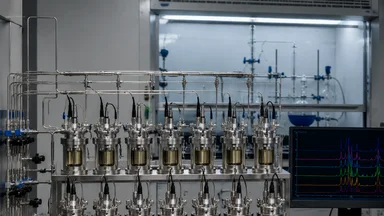
To understand the US$ 2 million figure, one must look at the tools required. Synthesizing a novel superconductor often begins with a tube furnace or a high-pressure synthesis chamber. For LK-99, the recipe involved heating a mixture of lead oxide, copper oxide, and phosphorus in a sealed quartz tube at around 900 °C for several hours. The process is sensitive to impurities; even trace amounts of oxygen or moisture can alter the product. Many labs lack the ultra-high-purity precursors or the specialized furnaces needed.
Once the sample is made, the real expense begins. Measuring electrical resistivity at low temperatures requires a cryostat or, for room-temperature claims, a precise four-probe setup. To confirm superconductivity, one must also demonstrate the Meissner effect via magnetic susceptibility measurements, typically using a SQUID (superconducting quantum interference device) magnetometer. A new SQUID system costs roughly US$ 500,000 to US$ 700,000. Few labs have one on hand, and those that do often charge internal users for beam time.
High-pressure tests add another layer. Some superconductor claims, like those from Ranga Dias at the University of Rochester, involve materials that only superconduct at extreme pressures—hundreds of gigapascals. Replicating such experiments requires diamond anvil cells, which themselves cost tens of thousands of dollars, and often synchrotron X-ray facilities to verify the crystal structure. The total cost for a single high-pressure replication can exceed US$ 1 million.
Consider the case of a group at the University of Cambridge that attempted to replicate LK-99 in August 2023. They had access to a SQUID magnetometer through a shared facility, but they still spent approximately US$ 300,000 on materials and staff time over three months. They eventually concluded that their samples showed no zero resistance, but the effort consumed resources that could have been used for other projects. This example illustrates why many labs hesitate to attempt replication without dedicated funding.
Even when a lab has the equipment, the expertise to interpret the data correctly is rare. Distinguishing true superconductivity from spurious signals—like filamentary conduction or ferromagnetic alignment—requires experience. Many groups that attempted LK-99 replication had to invest months of staff time, which is itself a major cost. The bottom line: a thorough replication in condensed-matter physics is not a quick check; it is a major research project.
How Incentives Skew the Replication Landscape
If replication is so expensive, who pays for it? The answer, more often than not, is nobody. Funding agencies around the world prioritize novel discoveries over confirmatory work. A proposal to replicate someone else's result is far less likely to be funded than one to explore a new material or phenomenon. This bias is built into the peer-review system and the culture of science.
Career incentives amplify the problem. Young researchers are told to make a name for themselves by finding something new, not by checking old results. Tenure committees rarely count replication attempts as major achievements. Journals, especially high-impact ones, prefer to publish breakthroughs rather than negative findings. A well-done replication that disproves a flashy claim may never see the light of day in a top-tier journal.
The result is a landscape where verified claims are systematically underfunded. The LK-99 episode is a stark example: despite the global excitement, only a handful of labs had the resources to attempt a full replication. Many more would have liked to but could not justify the expense without dedicated funding. The community was left to piece together partial results from those who could afford it, leading to months of uncertainty.
Some researchers argue that this skew is not accidental. The current incentive structure evolved to maximize the rate of discovery, assuming that false positives would eventually be weeded out. But as replication costs rise, that assumption breaks down. A false claim can persist for years, wasting resources and misdirecting the field. The LK-99 case may have resolved within months, but other controversies, like the high-pressure superconductor claims from Dias’s group, have dragged on for years.
What Actually Happened During the LK-99 Replication Rush
In the weeks following the LK-99 preprint, over a dozen labs worldwide began replication attempts. Chinese groups, including a team at the Beijing National Laboratory for Condensed Matter Physics, were among the first to release results. They reported that their samples showed signs of ferromagnetism but no zero resistance. A European group at the Max Planck Institute for Solid State Research found similar behavior: the samples were magnetic, not superconducting.
Other labs struggled to synthesize the material at all. The original recipe turned out to be more finicky than described. Some groups obtained a dark powder that did not levitate; others got a pellet that showed partial levitation but no resistivity drop. The Korean team itself issued conflicting statements, first defending the result, then acknowledging that the sample might have been impure. By September 2023, the weight of evidence had shifted against LK-99.
Yet a few researchers remained cautiously optimistic. They pointed out that even if LK-99 was not a superconductor, the synthesis method might yield other interesting materials. The episode also accelerated work on machine learning models to predict new superconductors, as if to bypass the expensive trial-and-error of synthesis. But the core question—whether room-temperature superconductivity existed in any known compound—remained unanswered.
The LK-99 replication rush was not a failure of science; it was a demonstration of science working under constraints. The community mobilized quickly, shared data openly, and reached a rough consensus within months. But the cost of that consensus was high, both in dollars and in opportunity cost. Many labs that spent time on LK-99 had to postpone their own research. The episode underscored a need for faster, cheaper, and more systematic replication mechanisms.
Lessons from Previous Superconductor Controversies
The LK-99 episode is not an isolated incident. In 1987, the discovery of high-temperature superconductivity in cuprates sparked what was called the "Woodstock of physics"—a frenzy of replication attempts that led to the confirmation of the result within months. That episode cost millions but ultimately yielded a Nobel Prize and a new field of research. The difference was that the cuprates were relatively easy to synthesize, and the effect was clear.
More recent controversies have been messier. In 2019, Ranga Dias and his team reported room-temperature superconductivity in a carbon-sulfur-hydrogen compound at high pressure. The claim was met with skepticism from the start. Several labs attempted replication, but the experiments were difficult and expensive. In 2022, Dias’s group published a retraction of an earlier paper after allegations of data manipulation. The controversy continues, with some researchers still defending the results. A detailed look at the Dias case reveals how replication costs can delay resolution. For instance, a group at the University of Illinois tried to replicate Dias's 2020 claim of room-temperature superconductivity in a carbon-sulfur-hydrogen compound. They spent over US$ 1.5 million on diamond anvil cells, synchrotron time, and personnel over two years. They eventually reported that they could not reproduce the original results, but their negative findings were published only in a lower-tier journal, limiting their impact.
Each episode follows a similar pattern: a dramatic claim, a rush to replicate, partial or conflicting results, and a slow resolution that can take years. The cost of these false leads is not just financial; it also sows doubt in the scientific process. When a high-profile claim is later found to be flawed, the public and policymakers may lose trust in science. The replication trap, as some call it, threatens the credibility of the entire field.
One lesson is that the field needs better standards for evidence. Superconductivity claims should be required to show multiple signatures—zero resistivity, Meissner effect, and specific heat jump—before being announced. Another lesson is that replication should be funded as a routine part of the research cycle, not as an afterthought. The LK-99 episode showed that when replication is left to individual initiative, only the best-resourced labs can participate, leading to an incomplete picture.
A Proposal: Dedicated Replication Funds and Pre-Registered Studies
What would a healthier replication ecosystem look like? One proposal is to set aside 5–10% of condensed-matter physics research budgets specifically for replication. This money would be used to fund independent teams to verify high-impact claims soon after they are published. The funding would be expedited—a rapid-response mechanism that could release money within weeks, not months.
Pre-registration of replication protocols could add rigor. Before any results are known, a team would register their synthesis conditions, measurement methods, and analysis plan on a public repository. This would reduce the temptation to cherry-pick data or adjust the protocol until the original result is reproduced. It would also make it easier to compare results across labs.
A public database of attempted replications, including negative results, would be invaluable. Currently, failed replications are rarely published. A database would allow researchers to see at a glance which claims have been tested and with what outcome. Journals would need to commit to publishing negative results as short reports, without requiring them to be novel or positive. Some journals, like the Journal of the American Chemical Society, have started such initiatives, but adoption is slow.
Shared facilities could reduce costs. Instead of each lab buying a SQUID magnetometer, regional centers could offer beam time at cost, with priority for replication studies. The National High Magnetic Field Laboratory in the US already provides some of these services, but access is competitive. A dedicated replication facility, perhaps modeled on the budget cap that forced shared infrastructure in radio astronomy, could be a cost-effective solution.
What the Next Room-Temperature Claim Should Look Like
Despite the LK-99 disappointment, the search for room-temperature superconductivity continues. Several groups are pursuing different strategies, from hydrogen-rich compounds at high pressure to layered materials like graphite intercalation compounds. The next claim, when it comes, should be handled differently from the start.
First, the original authors should share the full synthesis recipe and raw data immediately upon submission, ideally on a public repository. Second, they should collaborate with independent labs to replicate the result before any press release. The budget squeeze that forced cheaper telescope designs in the 1980s shows that constraints can drive innovation; similarly, a culture of pre-publication replication could reduce the cost of false alarms.
Clear criteria for what constitutes a superconductor are essential. The community has converged on a standard set of evidence: zero resistivity, the Meissner effect, and a discontinuity in specific heat. Any claim that lacks one of these should be treated as preliminary. Funding agencies should pre-approve rapid-response grants that can be activated when a plausible claim appears, so that replication can begin within days.
However, there is a trade-off. Requiring pre-publication replication could slow down the dissemination of promising results. If every potential breakthrough must be independently verified before announcement, the pace of discovery may decelerate. Some researchers argue that the current system, despite its flaws, allows rapid sharing of ideas, and that the community can self-correct over time. The challenge is to balance speed with reliability. A mandatory pre-publication replication requirement might also favor well-funded labs, exacerbating inequalities. The goal is to cut the verification time from years to months, not to create a bottleneck that stifles innovation.
The LK-99 episode, for all its drama, resolved relatively quickly because the community mobilized. But the next claim might be more subtle, requiring more expensive equipment and longer experiments. The only way to avoid a repeat of the replication trap is to build the infrastructure for verification before the next big claim arrives. The cost of that infrastructure is high, but the cost of another false lead is higher.