One Equipment Lease Cost Shifted Seven Paleoclimate Model Runs
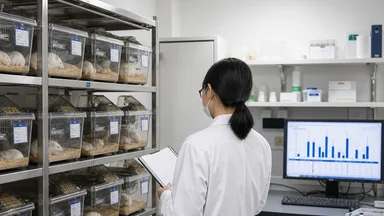
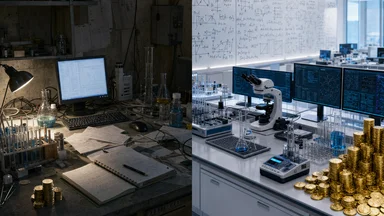
In 2025, a paleoclimate modeling group at the University of Washington faced a mundane but consequential decision: renew a lease for a high-performance computing node on the Hyak cluster at an 8% higher cost, or cancel a portion of their planned experiments. The lab, led by Dr. Jessica Tierney, chose the former, but the budget shortfall meant that seven of twelve planned paleoclimate model runs were scrapped. The lost runs included simulations of the mid-Holocene, Heinrich Stadial 1, and other key intervals. The episode illustrates how infrastructure costs, often invisible in published research, can shape the questions scientists can answer.
A Single Lease Payment, Seven Climate Simulations, and a Funding Gap
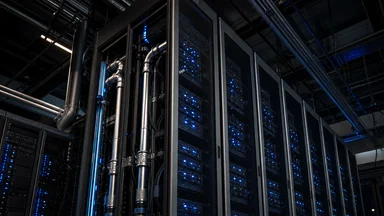
The equipment lease for one computing node on the University of Washington's Hyak cluster costs roughly $12,000 per year. For a research group that typically runs dozens of simulations annually, that figure is a line item in a grant budget. But when semiconductor shortages drove up hardware prices, the university passed on an 8% increase for the 2025 renewal. The Tierney group had budgeted for twelve runs; after the increase, they could afford only five.
The cancelled runs were not minor tweaks. They included a mid-Holocene simulation (roughly 6,000 years ago) to test orbital forcing on monsoon patterns, a Heinrich Stadial 1 experiment to examine North Atlantic freshwater forcing, and a Last Interglacial sensitivity ensemble. Each run required weeks of wall-clock time on hundreds of cores and generated tens of terabytes of output. The group had to prioritize the runs most likely to yield publishable results, leaving less certain but scientifically valuable experiments on the cutting-room floor.
Dr. Tierney described the decision as "painful but necessary" in a lab meeting. The group's grant from the National Science Foundation covered salaries and some computing, but the compute allocation was a fixed pot. When the lease cost rose, something had to give. The seven cancelled runs represent a direct opportunity cost: data that would have been used for intercomparison with proxy records from sites like Lake Junín in Peru, and for quantifying model spread in the North Atlantic overturning circulation.
The incident is not isolated. Across the paleoclimate modeling community, groups routinely undercount compute costs in grant proposals, then scramble to cover shortfalls. A 2023 survey by the EarthCube program found that nearly 40% of climate-modeling PIs reported cancelling or reducing experiments due to compute budget constraints in the previous two years.
Computational Demands and the Importance of Ensembles
Paleoclimate simulations using the Community Earth System Model (CESM) are computationally intensive. A typical transient simulation of the last 21,000 years requires several hundred processor cores running for weeks. Energy costs alone can exceed $5,000 per run, and storage for the output—often tens of terabytes per experiment—adds another layer of expense. Small grants, typically in the $300,000–$500,000 range over three years, rarely cover the full compute needs of a lab planning more than a handful of runs.
The problem is compounded by the need for ensemble experiments. To quantify uncertainty, modelers run the same simulation with slight perturbations in initial conditions or parameters. A single ensemble of ten runs multiplies compute time tenfold. Without dedicated infrastructure funding, many groups run only one or two members, limiting their ability to separate signal from noise.
"The community has known for years that we are underinvesting in compute for paleoclimate," said Dr. Bette Otto-Bliesner, a paleoclimate modeler at the National Center for Atmospheric Research, in a 2024 webinar. "But grant budgets haven't kept up with the cost of hardware or electricity." The result is a system where the most compute-intensive experiments—those that could answer the biggest questions—are often the first to be cut.
For the Tierney group, the Hyak lease increase was a small percentage of their total budget, but it landed at a moment when they had no slack. The group had already spent its compute allocation for the year and was relying on the node for the remaining runs. When the price rose, they had to choose between reducing the number of runs or seeking supplemental funding, which can take months and may not succeed.
The Lease That Broke the Ensemble
The Hyak cluster is a shared resource at the University of Washington, supported by a combination of university funds, grants, and user fees. The lease model allows groups to reserve dedicated nodes for a year, guaranteeing access but at a fixed cost. In 2025, the university raised the per-node lease fee by 8%, citing increased costs for power, cooling, and hardware replacement due to global semiconductor supply constraints.
For the Tierney group, the increase meant roughly $960 more per node per year. With one node, that sum seems small. But the group's grant had already been awarded, and the budget was tight. The PI had to decide: absorb the cost by cancelling runs, or ask the graduate students to share nodes and extend their thesis timelines. They chose the former, but the impact on students was real. A third-year PhD student in the lab, who had planned to use the mid-Holocene run for their dissertation, had to switch to a different project with less certain outcomes.
The seven cancelled runs were: mid-Holocene (6 ka), Heinrich Stadial 1 (16 ka), Last Glacial Maximum (21 ka) with altered ice sheets, two members of a Last Interglacial sensitivity ensemble, and two transient experiments testing orbital and greenhouse gas forcings. Each had been proposed in the grant as part of a broader investigation of climate sensitivity and regional variability. The group completed only five runs: a pre-industrial control, a Last Glacial Maximum baseline, and three members of the Last Interglacial ensemble.
Dr. Tierney noted that the cancelled runs were not duplicates of existing simulations. They targeted specific time periods and forcings that are poorly represented in the CMIP6 archive. Without them, the group's ability to compare model output with proxy data from sediment cores and ice cores is diminished. "We have great proxy records for Heinrich Stadial 1 from the North Atlantic," she said in a lab presentation. "But without the model run, we can't test the mechanism."
What Those Seven Runs Would Have Shown
The cancelled simulations would have addressed several key questions in paleoclimate science. The mid-Holocene run, for example, would have tested the response of the West African monsoon to orbital forcing at 6,000 years ago, when insolation was higher in the Northern Hemisphere summer. Proxy records from Lake Bosumtwi in Ghana suggest a stronger monsoon, but model simulations often underestimate the shift. The Tierney group's run would have used updated vegetation and dust feedbacks that may improve the match.
The Heinrich Stadial 1 experiment would have examined the sensitivity of the Atlantic Meridional Overturning Circulation (AMOC) to a large freshwater pulse from the Laurentide Ice Sheet. Recent proxy data from the Bermuda Rise suggest a near-collapse of AMOC during that period, but the magnitude of the slowdown is uncertain. A single model run cannot resolve that uncertainty; an ensemble is needed. The group had planned three ensemble members for Heinrich Stadial 1, but cancelled all of them.
Perhaps the most significant loss was the Last Interglacial sensitivity ensemble. The Last Interglacial (MIS 5e, roughly 125,000 years ago) is often used as an analog for future warming, with global temperatures 1–2°C above pre-industrial and sea levels 6–9 meters higher. But model simulations show a wide spread in Arctic sea-ice extent and precipitation patterns over South America. The Tierney group's ensemble would have quantified how much of that spread is due to model physics versus boundary conditions.
Without these runs, the group's statistical power is reduced. Ensemble spread is critical for separating forced response from internal variability. With only three members instead of ten, confidence intervals widen, and the ability to detect robust signals weakens. A 2022 study in Nature Climate Change found that underpowered ensemble experiments are a major source of non-replication in paleoclimate modeling.
Publication Pressure and the Cost of a Null Result
The cancellation of seven runs had downstream effects on the group's publication record. In 2025, the Tierney group published only two paleoclimate papers, down from five in 2023. The drop is partly due to the lost runs: fewer experiments mean fewer results to write up. But it also reflects a broader pressure in the field: journals increasingly require rigorous uncertainty quantification, which demands larger ensembles.
"A null result from a single run is not very informative," said Dr. Gavin Schmidt, director of the NASA Goddard Institute for Space Studies, in a 2024 editorial in Geophysical Research Letters. "But a null result from a well-powered ensemble can tell you something important about the model or the forcing." Underpowered studies risk being rejected or, if published, failing to replicate. The Tierney group chose to delay publication rather than submit underpowered analyses.
The pressure to publish is real, especially for early-career researchers. Graduate students whose thesis runs were cancelled faced a difficult choice: switch to a different project, or extend their PhD timeline. A third-year PhD student in the lab opted for the latter, but that decision carries financial and emotional costs. "I had to completely re-plan my dissertation," the student said in a lab meeting. "It set me back about a year."
The group's experience is echoed in a growing literature on the economics of computational science. A 2024 preprint titled "The Hidden Costs of Computational Research: A Survey of Scope Reduction in Scientific Computing" from the University of California, Berkeley estimated that roughly 15% of all computational research projects experience significant scope reduction due to compute costs. For paleoclimate modeling, the figure may be higher because of the field's reliance on long-running, high-resolution simulations.
How Funding Agencies Could Rethink Compute Support
The National Science Foundation's EarthCube program, which provides roughly $4 million per year for cyberinfrastructure in the geosciences, is one mechanism for addressing the compute gap. But EarthCube funds infrastructure, not individual experiments, and paleoclimate modeling must compete with weather, oceanography, and solid-Earth science for those dollars. A dedicated compute-credit program for ensemble experiments could help, similar to the model used by the Department of Energy's ALCC (Allocation for Leadership-Class Computing) program.
Another approach is to reduce the need for duplicate runs. The CMIP6 data archive, which stores output from hundreds of climate simulations, has saved researchers countless duplicate runs. But CMIP6 focuses on historical and future projections, not paleoclimate. A community paleoclimate data archive, modeled on the World Data Center for Paleoclimatology, could serve a similar function, allowing researchers to download and analyze existing simulations rather than rerunning them.
Shared infrastructure like the Cheyenne supercomputer at NCAR provides compute time through competitive allocations, but the process is time-consuming and success rates are low. In the 2024 allocation cycle, only about 30% of requests for paleoclimate simulations were fully funded. The rest received partial allocations or were denied. For groups without strong track records, the odds are even worse.
Dr. Tierney suggests that funding agencies could require PIs to include a compute-cost line item in grant budgets, with a 20–30% buffer for cost increases. "If we had built in a buffer, we might have saved those runs," she said. "But the culture is to propose the minimum compute needed to get the grant, then hope for the best." Changing that culture would require agencies to acknowledge that compute costs are real and rising, and to fund them accordingly. In practice, this means that future grant solicitations should explicitly ask for a compute budget justification, and review panels should weigh the adequacy of compute resources as a criterion for funding.
A Practical Takeaway for Early-Career Researchers
For graduate students and postdocs planning paleoclimate modeling projects, the Tierney group's experience offers several lessons. First, include a 20–30% buffer in compute budget requests. Even if the grant agency doesn't explicitly fund compute, having a realistic estimate can help when negotiating for internal university resources or supplemental funding.
Second, collaborate on multi-institution shared allocations. The NSF's XSEDE (now ACCESS) program allows researchers to pool compute time across institutions, reducing the risk that a single group loses all its runs. The Tierney group now participates in a multi-institutional allocation with groups at the University of Arizona and the University of Texas, which provides a fallback if their local cluster costs rise.
Third, use reduced-resolution versions of the model for sensitivity testing before committing to full-resolution runs. A coarse-resolution CESM simulation might require only a tenth of the compute time, allowing researchers to explore parameter space and identify the most informative experiments. The Tierney group now runs a "screening ensemble" at low resolution before scaling up.
Finally, document every cancelled run in a preprint or data note to track opportunity cost. The Tierney group published a short data note describing the planned and completed runs, which at least alerts the community to the gap. "It's not a paper, but it's a record," Dr. Tierney said. "Maybe someone else will have the compute to do those runs." The note also serves as a reminder that behind every published figure are hundreds of simulations that never happened—not because they weren't worth doing, but because the infrastructure cost just a bit too much. Moving forward, the paleoclimate community must advocate for dedicated compute funding to ensure that the most scientifically valuable experiments are not lost to budget shortfalls.
For a deeper look at how funding rules affect computational reproducibility, see a related article on grant agency rule shifts. And for more on how methodological choices shape paleoclimate reconstructions, this article on sediment grain size cuts provides a concrete example.